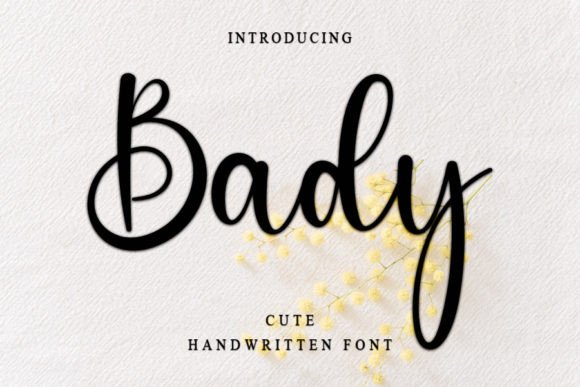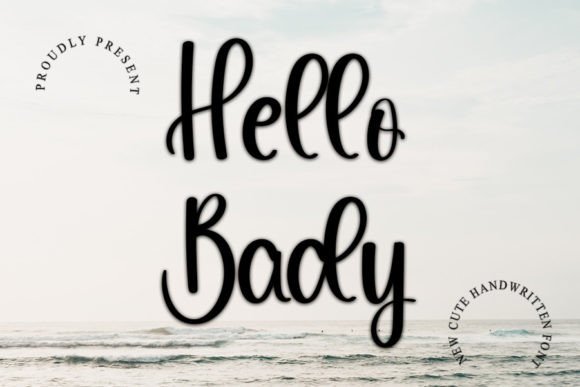
Hello Bady: A Handwritten Font That Builds Trust and Charm
As a small business owner who’s designed everything from candle labels to café menus, I’ve learned that typography isn’t just about “looking nice.” It’s one of the quietest, most powerful tools for shaping how customers feel about your brand—before they even read a word. Hello Bady is that rare handwritten font that feels personal without being childish, elegant without being stiff, and timeless without fading into the background. It’s not just another script font—it’s a branding partner you can rely on across every customer touchpoint.
Hello Bady lives in the Script Amp category, which means it’s built for impact: expressive, intentional, and crafted for visibility at larger sizes. Its lines flow with subtle variation—soft curves, gentle tapering, and delicate entry/exit strokes—that give it warmth and authenticity. Unlike overly ornate scripts or rigid calligraphy fonts, Hello Bady balances personality with clarity. It doesn’t shout; it invites. And that makes it ideal for businesses where approachability, craftsmanship, and care matter—think handmade skincare brands, independent bookshops, wedding stationery studios, or artisanal food producers.
I first used Hello Bady on my own small-batch honey label—and immediately noticed how much more cohesive the whole package felt. The font’s elegance elevated the kraft paper packaging, while its legibility held up beautifully at 14pt on a 2-inch sticker. Since then, I’ve seen it work equally well on a minimalist boutique logo, a seasonal Instagram carousel post, and even a laminated café menu board. Why? Because Hello Bady performs like a display font should: it commands attention where it matters (logos, headers, product names), but remains readable in context—not as body text, but as meaningful visual punctuation.
Here’s where Hello Bady shines in real business use:
- Logos & Brand Marks: Its distinct letterforms—especially the lowercase ‘g’, ‘y’, and ‘a’—give your logo instant recognition. Perfect for service-based brands like life coaches or interior designers who want warmth and professionalism in one glance.
- Packaging & Product Labels: Whether it’s a soy candle jar, herbal tea tin, or ceramic mug, Hello Bady adds tactile charm without sacrificing scannability. Test it at 10–12pt on matte stock—it holds up better than many decorative scripts.
- Social Media Graphics: On Instagram or Pinterest, where visuals compete for seconds, Hello Bady creates memorable focal points in banners, quote cards, and limited-time offer graphics. Its rhythm guides the eye naturally—even in thumbnail size.
- Printed Collateral: Business cards, thank-you notes, and event flyers gain quiet sophistication when Hello Bady headlines a clean sans serif body (like Montserrat or Inter). No design degree required—just thoughtful contrast.
- Website Visuals: Use it sparingly but intentionally: hero section headlines, feature callouts, or testimonial accents. Avoid overloading homepage headers—let it breathe, and it’ll stand out all the more.
Consistency is where Hello Bady truly pays off. When your Instagram bio, product tag, receipt stamp, and website banner all share the same graceful rhythm, customers begin to recognize your brand by feeling—not just sight. That subconscious familiarity builds trust faster than any discount code. One local florist told me she switched to Hello Bady for her weekly email subject lines and dried-flower packaging—and within two months, repeat customers started commenting, “Your stuff just *feels* like you.” That’s brand alignment in action.
That said, Hello Bady isn’t meant to do all the work. It’s a premium font, not a system font—and it thrives when paired thoughtfully. My go-to pairing? A neutral, highly readable sans serif (like Poppins or Open Sans) for body copy, forms, and mobile navigation. For print-heavy brands—say, a stationery shop or letterpress studio—a warm serif like Merriweather or Lora also complements Hello Bady beautifully, adding texture without competing. The key is contrast: let Hello Bady lead with personality, and let your supporting typeface handle clarity and function.
Before rolling it out everywhere, test Hello Bady in your actual workflow. Print a mock-up label at true size. Zoom out on your phone screen to check how it reads in a Stories highlight. Paste it into your Canva template and see how it flows beside your current color palette. Does it still feel like *you*? If your brand voice is bold and energetic, Hello Bady’s softness might need balancing with stronger layout choices. If your audience skews older or values tradition, its timelessness will resonate deeply.
And always verify licensing. Hello Bady is a commercial font—meaning you’ll need an appropriate license if you’re using it on physical products (like embroidered tote bags), digital templates you sell, client deliverables, or downloadable assets. Script Amp fonts typically include clear usage terms, but double-check before pressing “buy” if your business model involves resale, SaaS tools, or white-label work. It’s a small step that protects both your brand and the designers who made Hello Bady possible.
At the end of the day, Hello Bady isn’t about chasing trends. It’s about choosing a typeface that reflects your values—thoughtfulness, authenticity, care—then letting it carry that message consistently, quietly, and effectively. Whether you’re launching your first Etsy shop or rebranding a decade-old café, this handwritten font gives you a grounded, human-centered foundation. Not flash. Not noise. Just clarity—with charm.